
Location
Send the property city or ZIP and where the bees sit on the property.
Honey-bee removal
Brown's Bee Farm performs live honey-bee removal and relocation for colonies in trees, structures, and wall voids. Send the property context before anyone estimates the work.
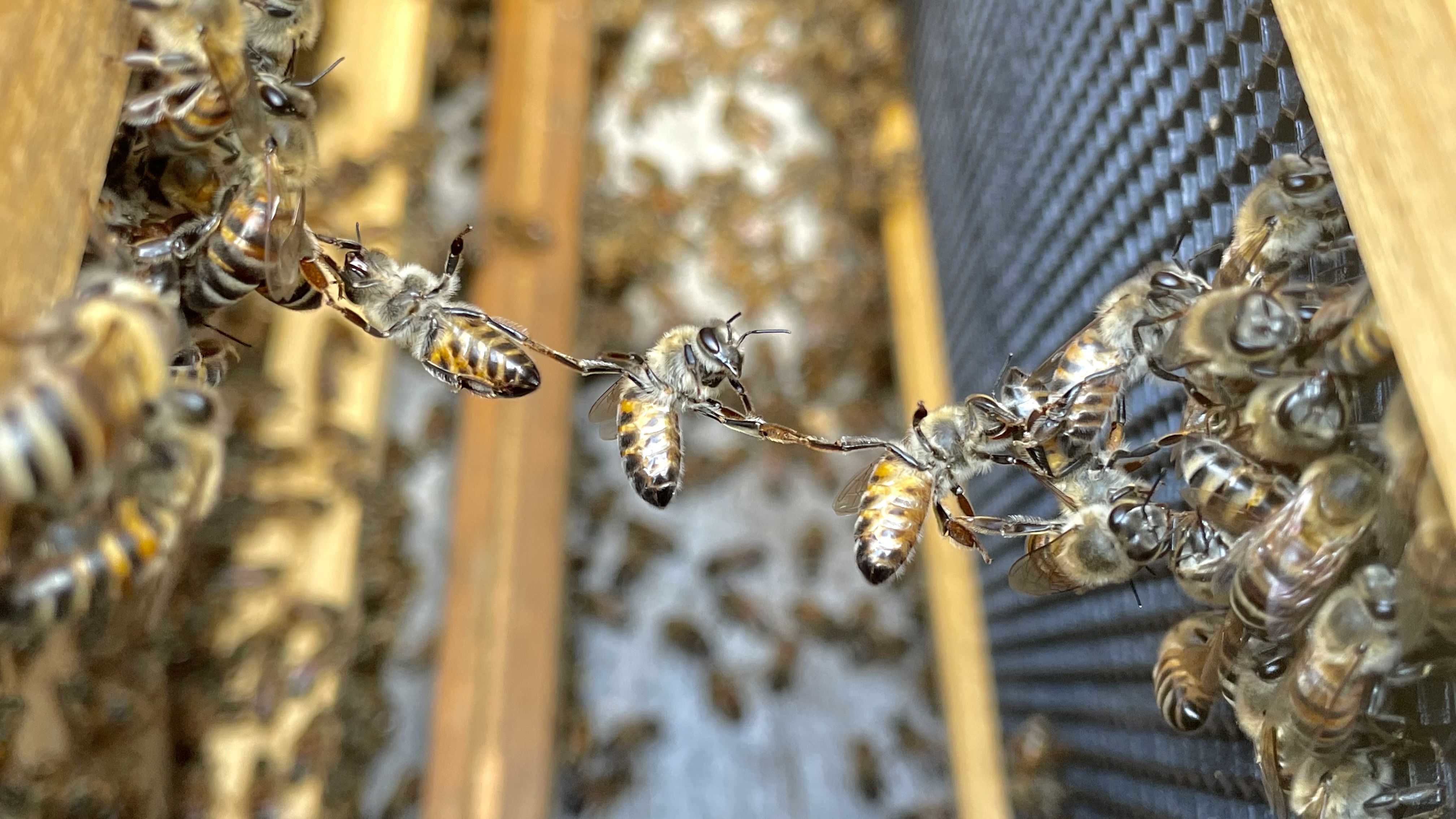
The first assessment
A few useful details can separate a likely swarm from a colony using a structural cavity and reveal access constraints before travel is discussed.
Send the property city or ZIP and where the bees sit on the property.
Describe a hanging cluster versus repeated traffic through one fixed opening.
Estimate height and show the roofline, wall, tree, fence, utility box, or surrounding structure.
Note when activity first appeared and whether it has changed.
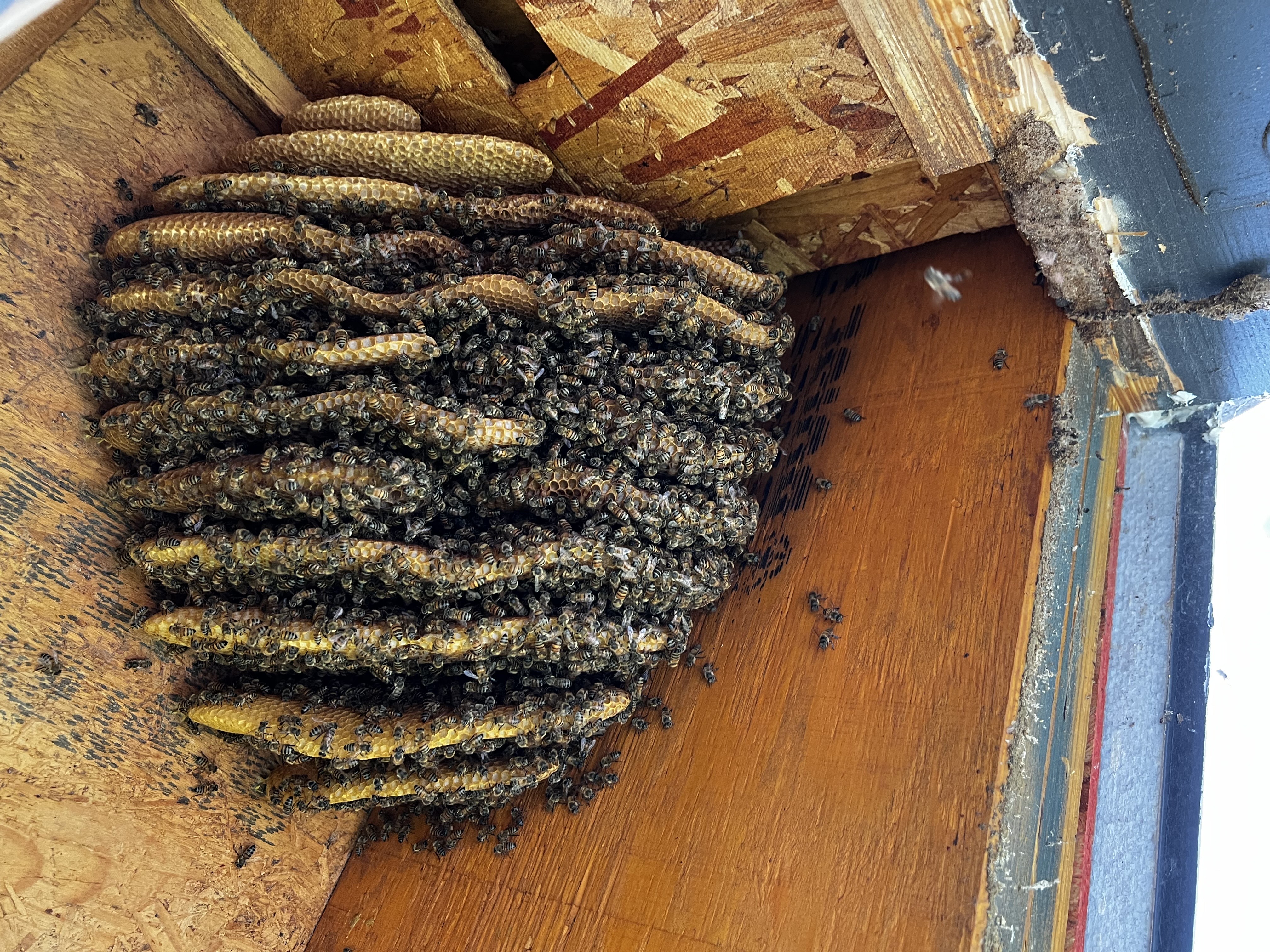
Structural colony scope
Brown's performs live removal from structures and wall voids. Before work starts, confirm whether the job includes access work, comb removal, cavity preparation, sealing, or finish repair.
Ask who handles structural access, remaining comb and honey, cavity preparation, closing the entry route, repairs, and follow-up activity.
Brown's stated approach
Brown's emphasizes live relocation without harmful chemicals. The plan still needs to fit the insect, structure, access, and site conditions.
Before scheduling
Brown's handles honey-bee colonies in trees, structures, and wall voids. Send photos of the location and entrance when requesting an assessment.
Leave an active structural entrance unchanged until the colony is assessed. Bees may seek another route, and comb or honey may remain inside the cavity.
Colony location, height, access, building material, roofing or electrical constraints, comb and honey, cavity condition, and repair responsibility can all affect the work.
Text the city, a close photo, a wider structural view, approximate height, and when activity began.